In the world of sleep science, your mattress often gets all the attention, but your pillow is arguably just as important for a restorative night’s rest. A pillow is responsible for maintaining the alignment of your cervical spine; the wrong choice can lead to chronic neck pain, headaches, and restless nights. When searching for a high-performance pillow, two materials dominate the market: latex and memory foam. While they may look similar at a glance, the difference between latex and memory foam pillows is significant in terms of feel, temperature regulation, and material composition. Understanding these nuances is essential for choosing the right support for your unique sleeping style.
The most fundamental difference of latex and memory foam pillow lies in what these pillows are actually made of.
Memory Foam: Also known as viscoelastic foam, memory foam was originally developed by NASA in the 1960s. It is a synthetic, petroleum-based material designed to be highly energy-absorbent and soft.
Latex: Natural latex is derived from the sap of the Hevea brasiliensis rubber tree. It is a more eco-friendly, renewable resource. While synthetic latex does exist, premium pillows typically utilize natural or blended latex for superior durability.
For sleepers who prefer the scientifically engineered, pressure-relieving properties of synthetic foam, Sunyolk memory foam pillows offer a range of options that provide that classic weightless feel.
Perhaps the most noticeable difference when you lay your head down is how the pillow responds to your weight. This is often referred to as response time.
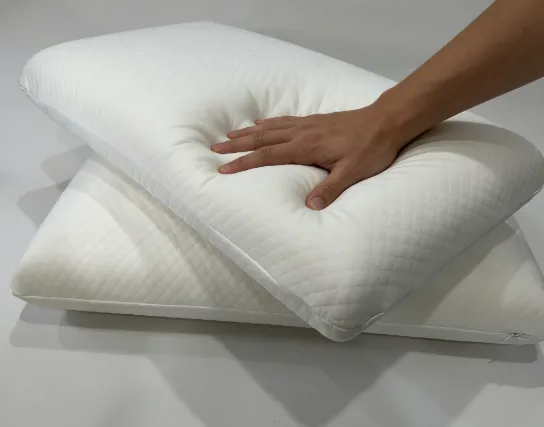
Memory foam is characterized by its slow response. When you apply pressure, it takes a few seconds to conform to the shape of your head and neck. It creates a deep cradle or sinking sensation, which is excellent for those who need significant pressure point relief.
Latex, on the other hand, is a fast-response material. It is naturally bouncy and elastic. Instead of sinking into the pillow, you feel like you are floating on top of it. Latex provides a buoyant support that immediately pushes back, making it much easier to change positions during the night without feeling stuck.
If you are a sleeper who dislikes the feeling of being hugged by your pillow and prefers a more resilient, springy surface, Sunyolk latex pillows are engineered to provide that immediate, uplifting support.
For hot sleepers, temperature is often the deciding factor.
Memory foam is a dense material that traditionally relies on body heat to soften and contour. This density can sometimes trap heat, leading to a warmer sleeping surface. While modern innovations, like gel-infused foam or open-cell structures, have improved this, memory foam generally remains warmer than its natural counterpart.
Latex has a natural advantage here. Because of its cellular structure, latex is inherently more breathable. Furthermore, most latex pillows are manufactured with small pin-core holes throughout the foam to facilitate maximum airflow. This open-cell design makes latex a superior choice for those who prioritize a cool, dry sleep environment.
When investing in a high-quality pillow, you want it to last.Natural latex is one of the most durable materials in the bedding industry. It is highly resistant to sagging and can maintain its original shape and support for 5 to 10 years. Because it is so resilient, it doesn’t clump or flatten over time.
Memory foam pillows also have a respectable lifespan, typically lasting 2 to 5 years. However, lower-quality memory foam can eventually lose its ability to rebound, leading to a permanent indentation where your head rests. Choosing a reputable manufacturer like Sunyolk ensures that you are getting high-density foam that resists premature softening.
Hygiene is another area where the materials diverge.
Latex: Natural latex is inherently antimicrobial, anti-fungal, and resistant to dust mites. This makes it an ideal choice for allergy sufferers or those concerned about mold and mildew.
Memory Foam: While memory foam is also fairly resistant to dust mites due to its density, it doesn’t possess the same inherent antimicrobial properties as natural latex. However, most modern memory foam pillows come with hypoallergenic covers to bridge this gap.
| Feature | Latex Pillows | Memory Foam Pillows |
| Material Origin | Natural (Rubber Tree Sap) or Blended | Synthetic (Viscoelastic Polyurethane) |
| Response Time | Fast (Bounces back instantly) | Slow (Gradually conforms to shape) |
| Feel/Sensation | Buoyant, Floating on top | Contouring, Cradling or sinking |
| Cooling | Inherently breathable (Pin-core holes) | Tends to retain heat (unless gel-infused) |
| Durability | Exceptional (5–10 years) | Moderate (2–5 years) |
| Pressure Relief | Good (General support) | Excellent (Targeted point relief) |
| Best for | Hot sleepers & Active sleepers | Side sleepers & Chronic pain sufferers |
Deciding between the two depends largely on your personal sleep personality.
Choose Memory Foam if: You love the feeling of your pillow melting around your head. It is ideal for side sleepers who need deep pressure relief for their ears and neck, or for anyone who wants a pillow that stays exactly where they put it. Explore the Sunyolk memory foam pillows sale for options that offer customized contouring.
Choose Latex if: You prefer a lifting sensation and want a pillow that moves with you. It is perfect for combination sleepers who toss and turn, as well as eco-conscious consumers and hot sleepers. The Sunyolk latex core pillow provides the breathable, buoyant support required for these needs.
In summary, there is no objective winner in the latex vs. memory foam debate; it is entirely a matter of preference. Memory foam offers the ultimate in contouring and pressure relief, while latex provides a cooler, more responsive, and eco-friendly alternative.
By understanding these differences and sourcing your bedding from a trusted provider, you can select a pillow that doesn’t just feel good in the showroom, but continues to support your health and comfort for years to come. Whether you sink into memory foam or float on latex, the right pillow is waiting to transform your sleep experience.